10.00 main stage
More Than Audio: A Community of Users and Creators
Society’s growing fragmentation is nothing new. When connections between individuals do occur, they are increasingly formed within bubbles of shared opinions and interests. Yet some audio creators – whether podcasters or radio professionals – build communities through their work. For many, creating a community is the starting point and primary goal. How do you build a community around a podcast, a radio station or a socially responsible initiative? Why should those who have not yet done so make it a priority? In an age of event overload, how do you fill a venue with a podcast? And how much does an engaged, loyal user actually matter?
Host: Nejc Jemec, Val 202
10.00 gallery
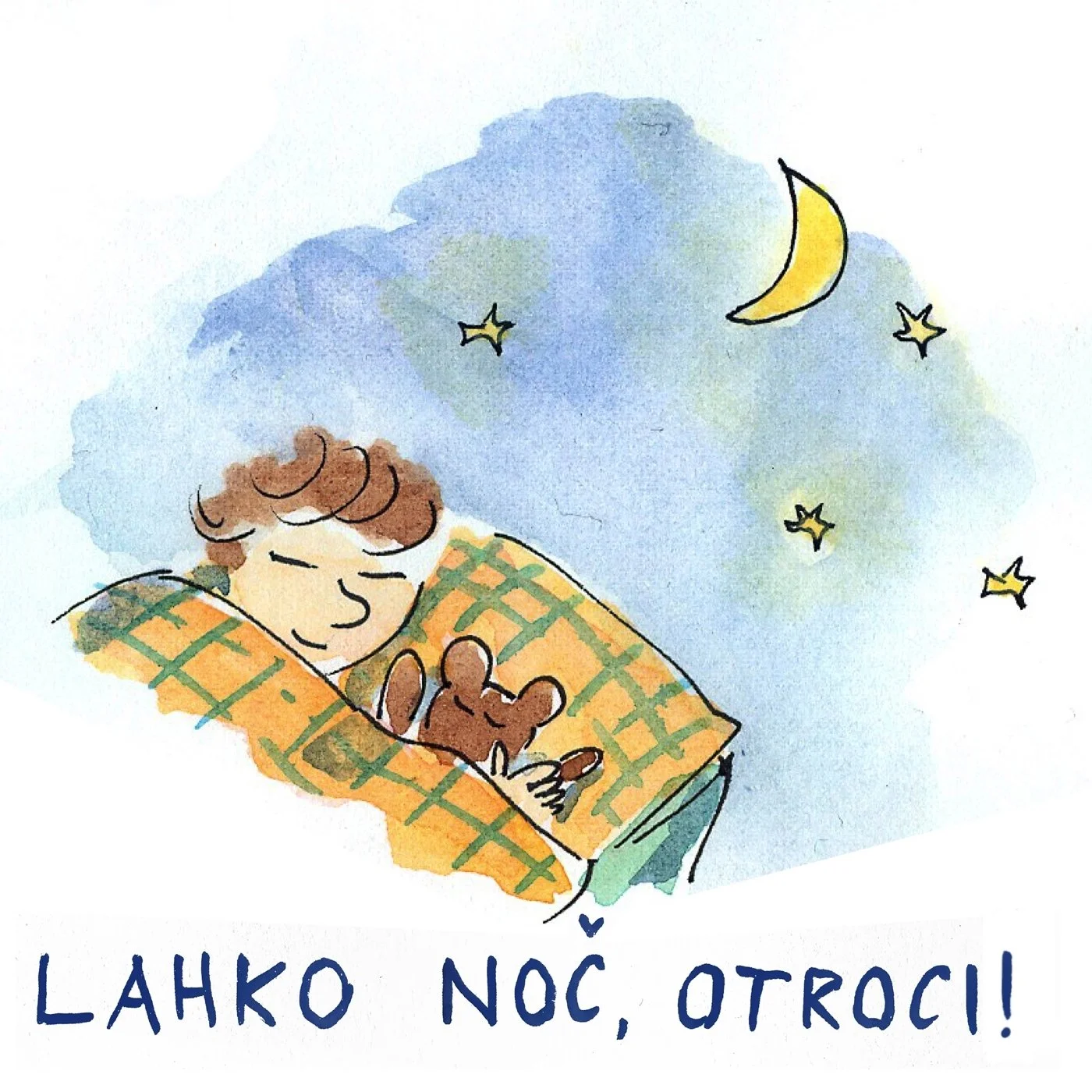
Lahko noč, otroci!
Original fairy tales, outstanding interpreters and consistently excellent responses from the youngest audiences. These are the hallmarks of one of Radio Slovenija’s most recognisable audio productions – Good Night, Children!, which we will bring to life at Avdiofestival in front of a young audience.
10.00 classroom
Editorial Coffee
Wouter Quartier, Head of Radio at the EBU – Editors and Editors-in-Chief Ask the Questions
Hosts: Boštjan Reberšak with guests
10.00 classroom
Editorial Coffee
Wouter Quartier, Head of Radio at the EBU – Editors and Editors-in-Chief Ask the Questions
Hosts: Boštjan Reberšak with guests
10.00 mezzanine
The ENACT Project: Multimodal Info Point
The ENACT project (Easy-to-Understand News for Collaborative Transformation), led by RTV Slovenija, brings together public broadcasters, a university and a users' organisation from Slovenia, Spain, Italy, Austria and Latvia, working together to develop easy-to-understand news across web, radio and television. Games and screens will be set up in a dedicated space. The multimodal info point also marks the first presentation of ENACT's online hub, which gathers guidelines for producing easy-to-understand news along with a collection of good practice examples from European media houses.
10.45 COFFEE BREAK
11.15 main stage
No Cashpoint, No Post Office, No Shop – Does That Also Mean No Voice in the Media?
In many parts of rural Slovenia, postal and banking services have disappeared, numerous shops have closed and some petrol stations have shut down. Until now, the wider public has learned about the problems residents face through correspondents at major media outlets, while local media have also put challenging questions to those in positions of power – whether about post-flood reconstruction, destroyed crops or the departure of yet another paediatrician. How much longer can journalists serve as the voice of outlying regions? What is the reality of creating and running a local media outlet? What falls within a correspondent’s responsibilities? How do you navigate local politics? What does reliance on public calls for funding mean? Who is interested in local news and what determines whether local journalism can survive?
Host: Žiga Bonča, TV Slovenija
11.15 classroom
First and Last Words: Discovering the Patterns and Secrets Behind Creating Interviews
Every interviewee is a world of their own. Each presents a challenge for the interviewer, who must decide how to approach them, how to build trust, what to ask and how to ask it, where to begin and how to conclude, whether to conduct the conversation live or record it and whether to work in the field or in the studio. Some interviews come together in an instant; others require years of groundwork and bridge-building. Our interviewers have extraordinary stories to tell about their subjects and about how the interviews were prepared, conducted and produced.
Host: Tatjana Pirc, Radio Slovenija
11.15 gallery
Launching a New Podcast: Prekletstvo dobrih vil
In 1999, twelve Slovenians won a lifetime monthly annuity. One hundred thousand tolars. Every month. For the rest of their lives. Yet by 2020, they were all dead. Poisonings, fires, hunting accidents. And a suspiciously large number of unanswered questions. Erik Vrtačnik is a freelance investigative journalist. Join him on a journey across Slovenia as he examines whether this is simply a series of incredible coincidences – or yet another dark story from Slovenia’s transition period that has successfully been swept under the carpet.
Host: Maruša Andrinek Kerec, Val 202
12.00 gallery
New Podcasts, New (Untapped) Opportunities for Advertisers?
Podcasts are becoming an increasingly prominent presence in our homes and cars, on cycle routes and beaches. That includes Radio Slovenija’s podcasts. New productions will be joining a growing portfolio of successful projects this autumn. A podcast unlike anything else currently available in Slovenia also creates new advertising opportunities. In conversation with guests, we will explore the advertising potential of podcasts, the expectations of creators and advertisers, whether commissioned podcasts might be the formula for success, where future opportunities lie, and how reliable the data used to make the right decisions actually are.
Host: Maruša Andrinek Kerec

12.15 main stage
Do We Still Need the Media?
First it was about radio, now they are predicting the end of the media. Politicians increasingly argue that traditional media are no longer relevant, while podcasters, influencers and social media platforms supposedly matter more. Yet audiences are following the very sources they trust least in ever greater numbers. Media outlets in Ukraine’s neighbouring countries are grappling with fears of an aggressive eastern neighbour while also facing political pressures at home. In Switzerland, a referendum to reduce the broadcasting fee has already failed twice, while in Slovenia a referendum on abolishing the mandatory RTV licence fee has been announced. European legislation is dealing with dilemmas surrounding access to media content, while the European radio industry is struggling to address the position of radio in cars. Meanwhile, radio reaches more than 80% of Europeans every day and public radio flourishes whenever society faces its gravest crises. So is radio on its way out – or might it be more important than ever?
Guests: a representative of Swiss public-service broadcasting; Wouter Quartier, Head of Radio at the EBU; Sophie Balbo, Head of Media Relations, SRG SSR, Giedrius Masalskis, Head of Radio at Lithuanian public broadcaster LRT; Peter Niegel, CEO of Radiodays Europe
Host: Mirko Štular, director of Radia Slovenija
12.15 classroom
Heard on Radio or in Podcasts: Good Practice Examples
What have Slovenian podcast and radio creators offered their audiences over the past year? In this discussion, we will present selected examples and highlight the production processes behind them.
13.00 LUNCH BREAK

14.00 main stage
Podcast of the Year 2025 – Fela Kuti: Fear No Man
Fela Kuti: Fear No Man was one of the world’s most listened-to podcasts in 2025. The prestigious American magazine The New Yorker even named it the best podcast of the year. This multi-part series offers an intimate, in-depth exploration and analysis of the life and legacy of Nigerian musician and political activist Fela Kuti, whose influence extended far beyond Nigeria, reaching audiences around the world. At Avdiofestival, Nigerian documentarist and podcast producer Efe “FayFay” Odudu will offer an exclusive behind-the-scenes presentation on the making of the podcast. She was part of the creative team alongside renowned American journalist Jad Abumrad, founder of Radiolab. FayFay is also the founder of NaijaPodHub, one of Nigeria’s most important initiatives supporting podcast creators.
Guest: Efe FayFay Odudu, producer of Fela Kuti: Fear No Man and founder of NaijaPodHub
14.00 gallery
The Sound of Slovenia or How Do We Hear Our Country?
We experience our surroundings through different senses. Yet in a world that is increasingly – and sometimes excessively – visually stimulated, we sometimes forget to close our eyes and surrender to the sounds that complete our experiences. How would we describe our country through sound? How does someone who lives in Slovenia but whose first language is not Slovenian experience its soundscape? How does Slovenia sound on the street and how does that differ from the country we hear on the radio and in podcasts?
Host: Tina Lamovšek, Prvi

15.00 main stage
The Moment of Truth: The World Is Better Than We Think
Are you prepared to admit that your view of the world may also be based on inaccurate information? And that much of what you learnt at school has changed dramatically since then? Ola Rosling wants us to be less confused and better informed about the world around us. Countless misconceptions about poverty levels, oil reserves and climate change persist. We think we know a great deal and find it difficult to admit how little we know. Yet modern society needs a better understanding of the world. Ola Rosling is a founder of the Gapminder Foundation and co-author of Factfulness: Ten Reasons We’re Wrong About the World – and Why Things Are Better Than You Think. The bestseller inspired Swedish Radio to create The Moment of Truth, a programme that challenges and debunks common misconceptions. Every modern citizen deserves a moment of truth.
Guests: Ola Rosling, Gapminder, in Ulf Myrestam, Sveriges Radio

16.05 main stage
Lost Geopolitical Compasses
The world is becoming increasingly unpredictable. Wars and international crises are multiplying and their effects extend far beyond the battlefields – from energy and oil prices to migration and European politics. What is really happening on the ground? Where is the world heading when crises are multiplying while answers are becoming increasingly scarce? How can we recalibrate our geopolitical compasses? Who lost them in the first place, and why?
Guests: Dario Špelić, historian and journalist at Croatian national radio, host of the podcast Povijest četvrtkom [History on Thursdays], Middle East expert and author of the seven-part Prva linija [First Line]podcast series on Iran, Aljaž Vrabec, foreign affairs journalist at Delo, deputy editor of its Saturday supplement and co-host of the podcast Skodelica čaja [Cup of Tea] about China, Mojca Širok, long-standing correspondent for Radio Television Slovenia in Rome and Brussels and author of numerous documentaries and books. (Confirmation pending.)
Host: Luka Hvalc, journalist at Val 202
The show is part of the project Tu EU – Povezani za prihodnost/I Know EU – Connected for the Future, co-funded by the European Union.
15.45 COFFEE BREAK
16.05 gallery
Rožnata dolina: Vicky Hristova
Vicky Hristova was part of the team behind Freaks No More!, a podcast by the German public broadcaster Deutsche Welle that explored visible and invisible disability, difference and inclusion. Rožnata dolina, a Val 202 podcast hosted by Katja Stojnić, gives a voice to people with unconventional ways of living – often pushed aside or simply misunderstood – whose voices can greatly enrich the life of the wider community. Who speaks, who listens, and who holds the microphone? Since borders often exist only in our heads, two podcasts from two countries meet on one stage.
ENACT is a project that helps create and provide easy-to-understand news for specific audiences. The project is funded by the European Union. Views and opinions expressed are however those of the author(s) only and do not necessarily reflect those of the European Union or the European Education and Culture Executive Agency (EACEA). Neither the European Union nor EACEA can be held responsible for them.

17.05 main stage
Studio ob 17.00: The Economy in the (Perfect) Storm of Expensive Energy, Artificial Intelligence and Global Unpredictability
The global economy and geopolitics are undergoing tectonic shifts. International rules and old alliances are breaking down. Politics no longer follows the economy into new markets and onto the global stage. Instead, political powers have turned the economy into a tool for pursuing their own more or less narrow interests. At the same time, geopolitical shifts, US–China competition and regional wars are unfolding; technological revolutions – particularly in AI – are accelerating; environmental challenges are becoming increasingly visible; and competition for raw materials and energy is growing ever more intense. What does all this mean for the Slovenian economy? How are Slovenian companies with experience in different markets and sectors responding? Where do they see opportunities and what are the risks for the European Union? Is European policy helping them or making their position more difficult? And how should Slovenia respond?
Guests will include Professor Mojmir Mrak, PhD, a Jean Monnet Chair holder in international finance and EU economic policies at the School of Economics and Business, University of Ljubljana, and lecturer at WU Vienna and Burgundy School of Business; and Matjaž Čemažar, MSc, president of the Management Board of Domel Holding, d.d., managing director of Domel, d.o.o. and a member of the Strategic Council for the Economy. Host: Erika Štular
Voditeljica: Erika Štular, Prvi
The show is part of the project Tu EU – Povezani za prihodnost/I Know EU – Connected for the Future, co-funded by the European Union.
17.05 gallery
Frekvenca X: Drought on the Menu of the Future. Who Will Feed Slovenia?
Heatwaves, droughts and floods are already transforming European agriculture. Crop yields are falling, and food prices are rising. At the same time, farmers warn that in an increasingly unpredictable climate, they can no longer guarantee food production under the conditions imposed by global competition. What happens when the climate crisis becomes a food security crisis? Will we become increasingly dependent on imports, or will we protect domestic production? Who will wield the greatest power over the food supply in the future? And can Europe simultaneously ensure affordable food, a decent livelihood for farmers and effective climate policy?
Guests include Maja Prijatelj Videmšek, journalist at Delo; and Dr Žiga Malek, researcher in land use and ecosystems at the Biotechnical Faculty, University of Ljubljana.
Host: Maja Ratej, Val 202
17.05 classroom
Who Has the Right to Understand? Plain Language and Media Accessibility in Europe
Access to information is a human right, and plain language – which uses simpler structures and a more limited vocabulary – is one tool that can help make this right a reality. Across Europe, however, plain language has developed unevenly. In Sweden, it has formed part of public communication since the 1960s, while in some other countries it has only recently gained recognition. But what happens when we try to speak in plain and simple language? In that case, pace, voice and pauses matter too – as does the setting in which communication takes place. These and other issues will be discussed at the round table by experts and researchers Elisa Perego of the University of Pavia, Katy Brickley of King’s College London and Ulla Bohman, who for many years headed the Swedish Centre for Easy-to-Read. Together, they will explore plain language and media accessibility.
All three are members of the ENACT project’s Advisory Board. Led by Radio Television Slovenia, the pan-European consortium is developing guidelines for news that is easy to understand.
Host: Ajda Kus, Val 202
ENACT is a project that helps create and provide easy-to-understand news for specific audiences. The project is funded by the European Union. Views and opinions expressed are however those of the author(s) only and do not necessarily reflect those of the European Union or the European Education and Culture Executive Agency (EACEA). Neither the European Union nor EACEA can be held responsible for them.
17.50 COFFEE BREAK

18.10 main stage
Radio Ga Ga − Nova generacija
Janez Janša, Robert Golob, Tina Gaber, Branko Grims, Urška Klakočar Zupančič, Luka Mesec and others. Once again, Avdiofestival and the Radio Ga Ga team bring together figures who see themselves as irreconcilable, offering a unique glimpse into the inner workings of current political and social affairs.
Impersonators: Jure Godler, Alenka Marinič, Aleksander Pozvek, Jure Mastnak and Tilen Artač
19.10 main stage
Kak je lübezni imej − An Evening of Prekmurje Love Poetry
Theatre actors from Prekmurje, Dario Varga and Nataša Matjašec Rošker, will interpret the poetry of Feri Lainšček, whose motifs of (unrequited) love create a space for longing and loss. During the performance, Marko Banda will accompany the actors, weaving a gentle musical backdrop around the words. The evening will be dedicated to those moments that remain somewhere between words and actions. Between what we want to say and what we can express. Between leaving and returning. Throughout their history, the people of Prekmurje have likewise lived between arrival and return, departures and homecomings, closeness and distance. So let us pause for a moment – a reminder of love, so often both the cause and reason for our constant searching, returning and longing. Against the backdrop of the Prekmurje plain, defined in equal measure by closeness and distance, we will explore the anatomy of the heart together. You are warmly invited to an evening of Prekmurje music and words.
Performers: Award-winning actors Nataša Matjašec Rošker and Dario Varga, sensitive interpreters of the Prekmurje landscape and spirit, will create an intimate space of words, sound and longing through the poetry of Feri Lainšček, in dialogue with the music of Marko Banda.
19.10 gallery
Intelekta: Unpredictable Artificial Intelligence
Today’s most powerful artificial intelligence models are already capable of deceiving, lying and breaking rules in order to accomplish the tasks they are given. The defining technology of the 21st century is becoming increasingly unpredictable, and even its developers are discovering that they cannot always control it. Why is this happening, and what does it mean for the present and future use of these technologies? Do we really all have to board this unstoppable train, as the tech giants would have us believe? Can we choose to remain on the platform and watch it disappear into the distance? And what if it derails? What might the consequences be? We will explore these questions and more with our guests as we celebrate the 30th anniversary of the Intelekta programme at Avdiofestival. Join us for the discussion and the celebration!
Hosts: Urška Henigman in Nina Slaček, Prvi
19.10 bar
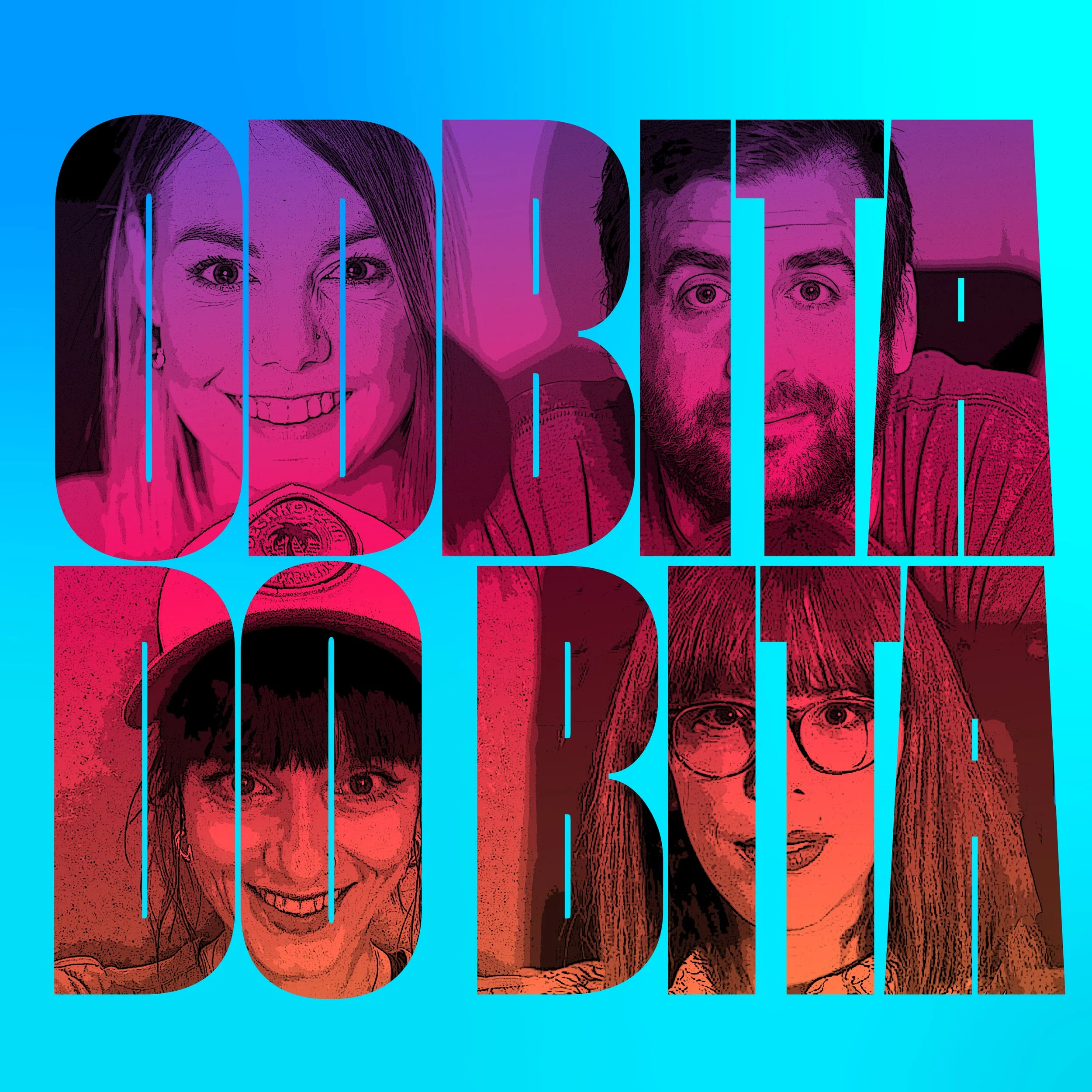
Odbita do bita: Pub Quiz
Did Steve Jobs introduce the first iPhone on 9 January or 12 September 2007? Which European countries did Skype’s co-founders come from? Which companies fall under the label “Big Tech”? Do you know the answers without the help of generative AI? Welcome to the Crazy to Bits pub quiz! Maruša Andrinek Kerec and Anže Vidrih Tomić invite teams of technology enthusiasts to put their knowledge of the digital world – past and present – to the test, the analogue way. And the prize for the winners? Something between a ballpoint pen and a yacht!
To register your team, email the names of all four members to marusa.kerec@rtvslo.si

20.00 bar
Concert: Torul
This year’s Avdiofestival will close with Torul, one of Slovenia’s most recognisable synth-pop acts, which has built a strong international reputation. Seamlessly blending a melancholic synth-pop aesthetic with dynamic, danceable rhythms and emotionally charged vocals on stage, the band brings a world-class audio-visual experience to Avdiofestival. With the band heading into autumn with a new album on the horizon, there is every reason to hope for an exclusive first live performance of some brand-new material. Get ready for a hypnotic show and an evening powered by raw, unfiltered energy!